
On the night of December 24th, long after most of the company had logged off for the holidays, Ebenezer CISO was still in his office, alone with a PDF.
It was the annual penetration test report – 187 pages of findings, risk ratings, and screenshots. The ink on the executive summary was barely dry, but the stack of Jira tickets already felt like a problem for “next year.”
Ebenezer rubbed his eyes and muttered the same line he’d used for the last five Decembers.
“Fine. We’ll tackle the criticals in January. The rest can wait.”
He closed his laptop. The office went dark.
That’s when he heard the chains.
The Ghost of Pentests Past
A familiar figure stepped out of the shadows: the company’s former security manager, now draped in chains made of USB sticks, report binders, and compliance checklists.
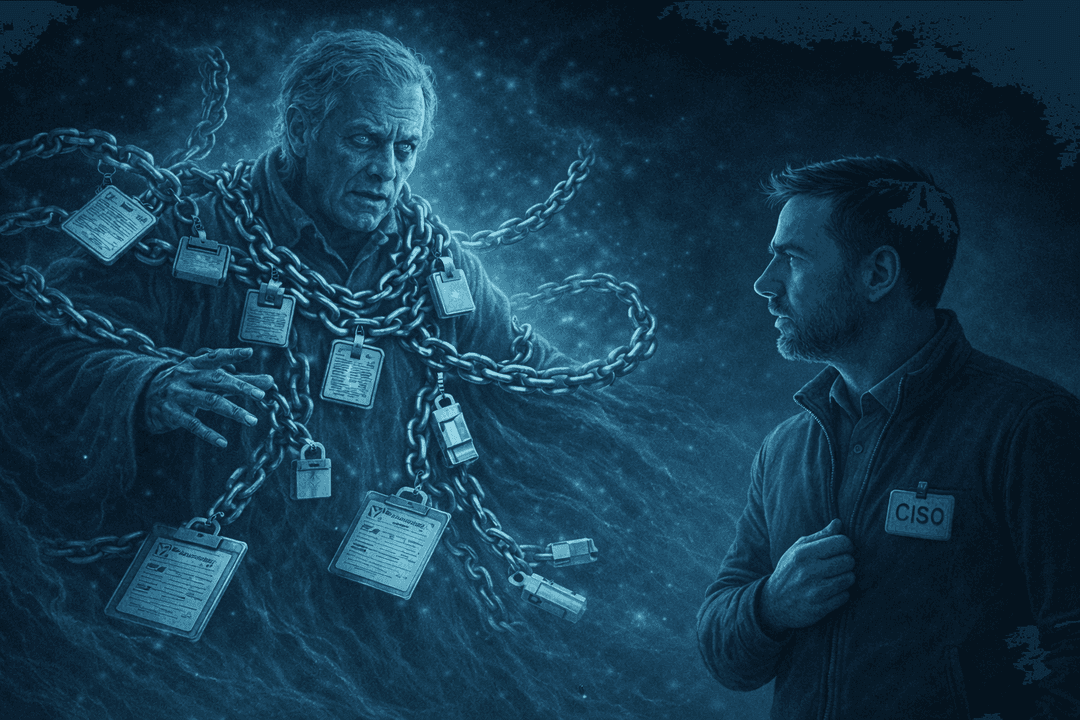
“I am the Ghost of Pentests Past,” the figure said. “These are the chains I forged in life, one annual test at a time. And you’re halfway through building your own. Come. See how it happens.”
They floated back through the years.
Ebenezer saw his first pentest as CISO: a hurried engagement squeezed in before a customer audit. The report had landed two days before the deadline. Half the findings were pushed to “Phase 2” remediation. Phase 2 never came.
Next, another year. Different vendor, same pattern. A massive PDF, rushed fixes for whatever could be patched without breaking production, and a quiet hope that nothing bad would happen before the next audit.
He watched as the company grew. New APIs. A cloud migration. Third-party integrations. Release cycles that used to be quarterly became weekly – then daily.
But the pentests stayed the same: once a year, sometimes twice, always behind reality.
“You weren’t doing security,” the Ghost said gently. “You were doing calendar management.”
Before Ebenezer could reply, the office blurred again.
The Ghost of Pentests Present
This time, the Ghost wearing a hoodie covered in vendor logos and conference badges appeared, holding a glowing tablet.
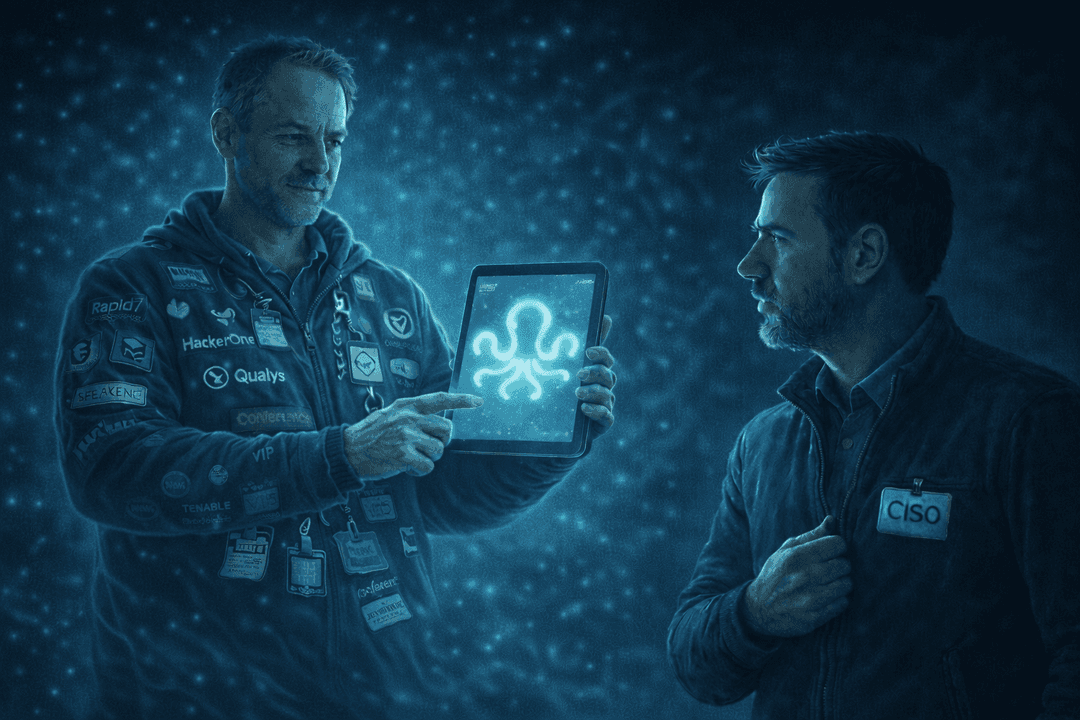
“I am the Ghost of Pentests Present,” they said. “Let me show you what’s happening right now.”
With a swipe, the Ghost opened a window into the company’s systems.
Engineering teams were rushing holiday features. A new microservice was being deployed to handle seasonal traffic spikes. Someone had just added an S3 bucket for logs – publicly accessible, because “we’ll fix the permissions later.”
None of this existed when the last pentest was scoped.
In a meeting room, the sales team was on a call with a major prospect. The customer’s security lead asked the question Ebenezer had come to dread:
“Can you demonstrate continuous testing of your external attack surface?”
The account executive looked down at Ebenezer’s slide: a single bullet – Annual external pentest (last completed: June) – and a PDF attached to the email.
“We run an annual penetration test with a reputable vendor,” the account executive said. “Here’s the latest report.”
On the prospect’s side of the call, faces didn’t brighten.
“Annual is better than nothing,” their security lead replied. “But your environment changes every week. How do you know you’re not exposed between those tests?”
The scene froze.
“Your customers have moved on,” the Ghost of Pentests Present said. “They expect continuous assurance. But your testing still runs on a holiday calendar.”
Ebenezer swallowed. “So what am I supposed to do? I can’t hire a red team big enough to test everything, all the time.”
The Ghost smiled. “That’s the point. You’re not supposed to throw people at the problem. You’re supposed to change how you think about pentesting.”
The office dissolved into darkness.
The Ghost of Pentests Yet to Come
The final spirit was different.
It stood taller than the others, cloaked in a dark, featureless hood that seemed to swallow the light from Ebenezer’s monitors. No conference badges, no vendor logos, no chains – just a silent, looming figure with one pale hand visible beneath the sleeve.
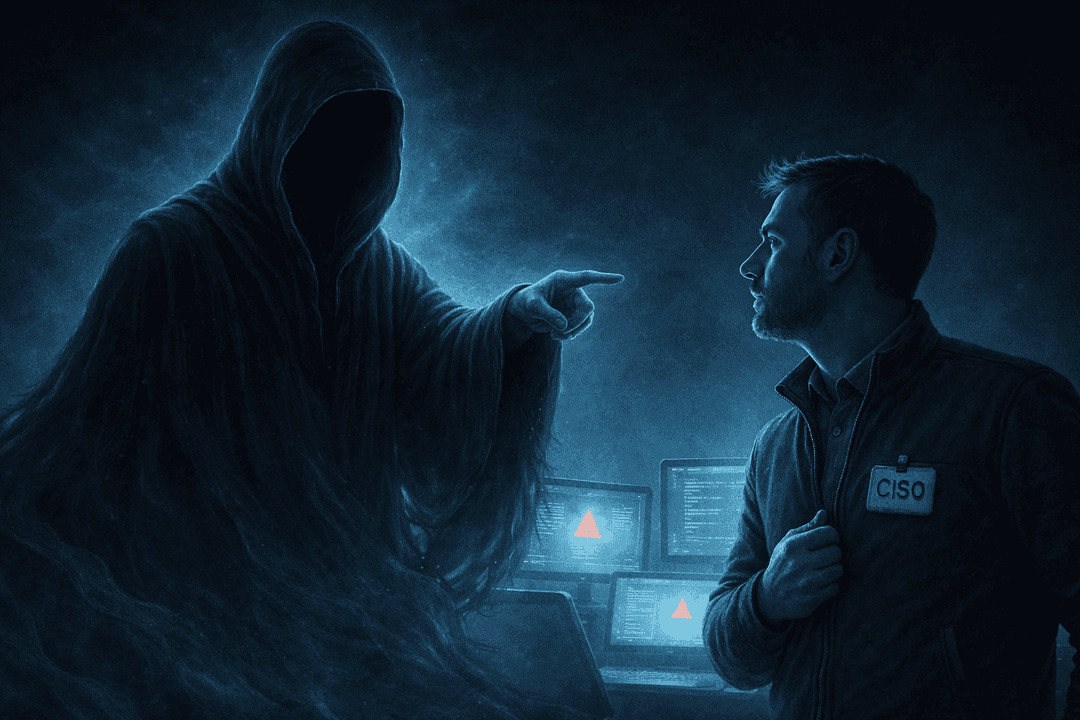
The spirit said nothing.
It simply pointed at a headline on a giant screen glowing in the void:
Mid-Market Provider Suffers Breach After Missed Critical Finding
He knew the logo. It was his company.
The article told the story: an exposed test endpoint, never included in scope, deployed after the last annual pentest. A simple misconfiguration. A trivial exploit. Millions in impact.
Regulators asked for evidence of ongoing testing. The response was one lonely PDF labeled “Pentest_June_Final_v3.pdf.”
Then the headline changed.
Same company, different year.
This time the story was about resilience: attempted attacks, quickly detected and contained; a report showing how fast critical findings were remediated; continuous, AI-assisted testing across external assets, APIs, and cloud infrastructure.
The difference had nothing to do with luck – and everything to do with strategy.
In this future, pentesting has traded its one-off, ceremonial role for a continuous engine humming inside the CI/CD pipeline – probing every change, streaming prioritized findings into ticketing systems, and spinning up audit-ready evidence whenever it’s needed.
“Is this future… ours?” Ebenezer whispered.
The Ghost finally spoke.
“That depends on what you do when you wake up.”
A Different Kind of Morning
Ebenezer CISO woke up at his desk to the sound of his laptop rebooting.
The pentest report was still there. The findings were still real.
But he opened a fresh page in his notebook and wrote three lines:
- No more one-and-done pentests.
- Testing that follows change, not calendar.
- One platform to orchestrate, triage, and prove it.
He knew he’d still need human expertise. He’d still need point-in-time tests for certain audits and deep dives. But the foundation had to change.
Pentesting had to become continuous – automated where possible, prioritized by real risk, and connected directly to remediation workflows. The kind of model platforms like Plainsea were built to enable.
That afternoon, when the account executive said, “The next big request for proposal (RFP) wants proof of continuous testing. Do we have it?” Ebenezer didn’t hesitate.
“We do now. And we can prove it any day of the year.”
This time, the ghost of December wasn’t a PDF on his desk.
It was a living, breathing view of his security posture.
And that made for a much happier new year.